
Wall ovens are not inherently harder to repair than freestanding ranges, but access is different — built-in units are wired or plumbed into cabinetry, so repair sometimes involves removing trim or a mounting bracket. Whether ovens are worth repairing usually comes down to age and the specific fault, which we determine before recommending anything.
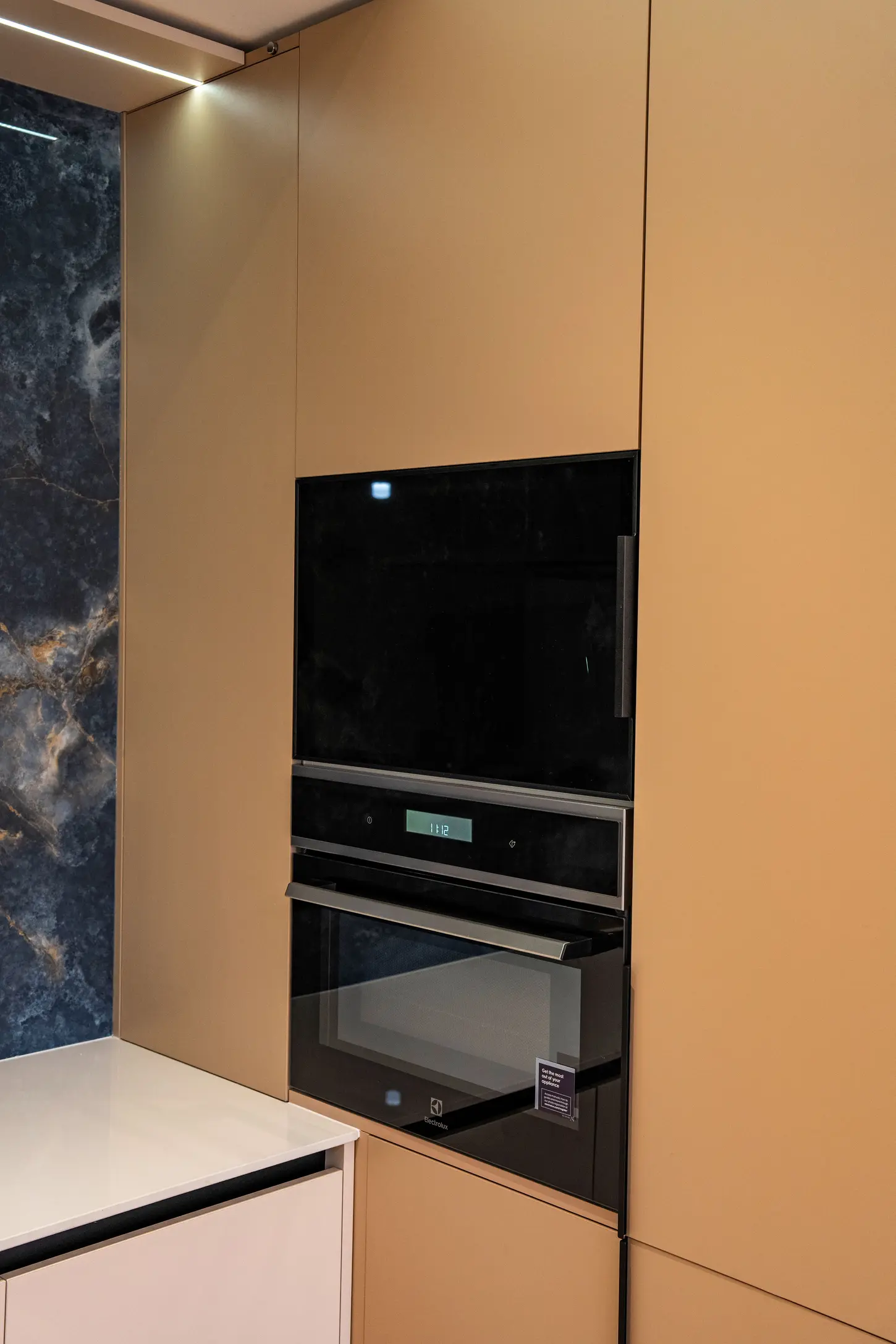
Wall ovens — built into cabinetry rather than freestanding — carry their own repair and installation considerations. A single wall oven has one cavity and one set of controls; a double wall oven stacks two independent units, each with its own control board, which means one cavity can fail while the other keeps working fine. We repair both configurations, and we also handle new-unit installation when a wall oven needs to be replaced rather than repaired.
Repair for existing units, installation for new ones.
Diagnosing and repairing both single-cavity and independent double-cavity wall ovens.
Confirming cutout dimensions and electrical requirements match the replacement model exactly.
Diagnosing double-oven control boards separately, since faults are usually isolated to one cavity.
Removing trim or mounting brackets where needed to reach internal components safely.
Not inherently — the components (elements, igniters, control boards, sensors) are similar to a freestanding oven's. The difference is access: a wall oven's built-in mounting sometimes means removing trim or a bracket first, which is why we recommend a technician familiar with built-in units rather than a general appliance repair generalist.
Most wall oven faults — a control board, an element, a sensor — are worth repairing rather than replacing, especially since built-in replacement units cost more than freestanding ranges and require exact cutout matching. Replacement becomes the more sensible option mainly when the unit is very old or the cutout size is being changed as part of a broader kitchen remodel.

Cost depends on the specific fault and whether the repair requires removing cabinetry trim for access. A contained repair like a sensor or door seal tends to cost less than a control board or element replacement on a wall unit, partly because of the added labor for access. We diagnose first so you know the actual scope before we start.
A single wall oven is the simpler of the two configurations — one cavity, one control board, one set of heating elements. A double wall oven stacks two full ovens in one cabinet cutout, each with independent controls, which means the upper and lower units can develop entirely separate faults. It's common for a double wall oven owner to notice only the top unit heating unevenly while the bottom continues to work perfectly, and that isolation is actually helpful for diagnosis — it tells us the problem lives in that specific cavity's components rather than something shared, like the incoming power supply.
When a wall oven needs full replacement rather than repair, the installation itself carries more precision requirements than swapping a freestanding range. The new unit has to match the existing cutout's width, height, and depth closely enough to fit the cabinetry, and the electrical connection needs to match the amperage and voltage the new model requires. Mismatched cutout dimensions are one of the most common installation snags homeowners run into when ordering a replacement wall oven without confirming measurements first, which is why we always verify the cutout before parts are ordered.
Straight answers — no clicking around.
Call Portland Oven Repair to schedule a same-day or next-day visit.
(888) 555-0123